Poweraic – Smart Power, Smart Life

How Many Watts Does a CPAP Machine Use? (Complete Power Consumption Guide)

Picture of Poweraic

Poweraic

When you purchase through links on our site, we may earn an affiliate commission. But the price of your product will not increase. Details

Last Updated: May 17, 2026 at 8:03 PM

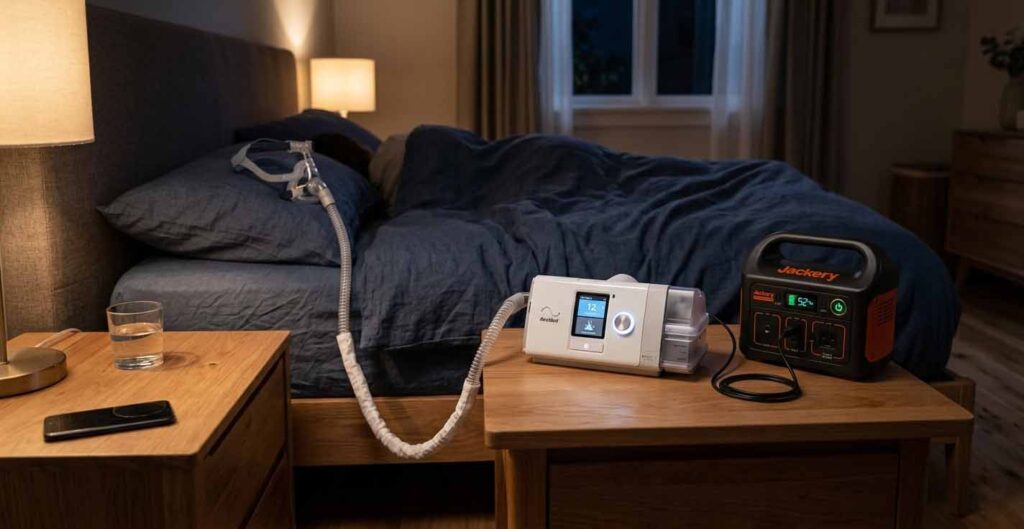
CPAP machine placed on a bedside table beside a sleeping bed

If you use a CPAP machine every night, one of the most important questions to understand is: how many watts does a CPAP machine use?

Knowing your CPAP power consumption is essential when preparing for power outages, traveling, camping, or choosing a battery backup system. It becomes even more important if you plan to use a portable power station because selecting the wrong battery size can leave you without therapy during the night.

The good news is that most CPAP machines do not consume a huge amount of electricity. However, the actual power usage depends on several factors, including pressure settings, humidifier use, heated tubing, and machine type.

In this guide, you will learn exactly how much power CPAP machines use and how to estimate your overnight energy requirements.

Image Source: Poweraic

Average CPAP Machine Power Consumption

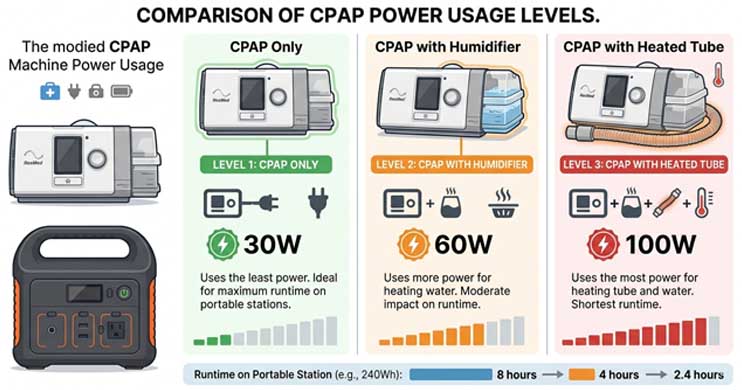
Most CPAP machines use between:

  • 30–60 watts during standard operation
  • 60–100+ watts with heated humidifiers and heated tubing enabled

Power use varies depending on machine settings and accessories.

Here is a quick overview:

CPAP Configuration

Average Power Usage

CPAP only (humidifier OFF)

30–40W

CPAP + humidifier

50–80W

CPAP + humidifier + heated tube

70–100W+

High-pressure settings

Can increase usage

For users running a CPAP machine from a battery or portable power station, these numbers matter because runtime depends directly on power consumption.

If you’re planning overnight backup, choosing the right battery size matters just as much as choosing the machine itself.

Image Source: Poweraic

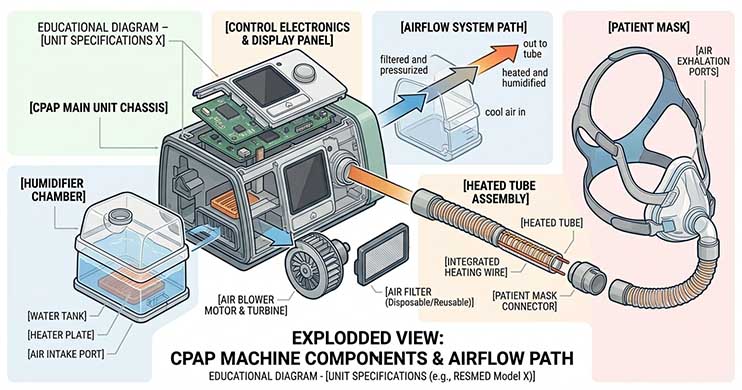
Factors That Affect CPAP Power Usage

Not every CPAP machine consumes the same amount of energy.

Several factors influence actual wattage:

1. Humidifier Settings

Heated humidifiers increase comfort but consume considerably more electricity.

Many users notice that battery runtime drops significantly when humidifiers are turned on.

2. Heated Tubing

Heated hoses prevent condensation buildup but can noticeably increase energy consumption.

3. Pressure Levels

Higher air pressure settings require the motor to work harder, increasing energy use.

4. Machine Model

Newer CPAP machines often include better energy efficiency technology.

Some travel CPAP units are specifically designed to minimize power consumption.

Image Source: Poweraic

How to Calculate Overnight CPAP Energy Usage

Calculating CPAP battery needs is easier than many people think.

Use this formula:

Watts × Hours = Watt-hours (Wh)

Example:

CPAP machine: 40W

Sleep duration: 8 hours

40 × 8 = 320Wh

This means your CPAP machine may require approximately 320Wh of energy overnight.

If humidifiers or heated tubing are enabled:

80 × 8 = 640Wh

That is a substantial increase.

Because of this, many experienced users disable heated features during camping or emergencies.

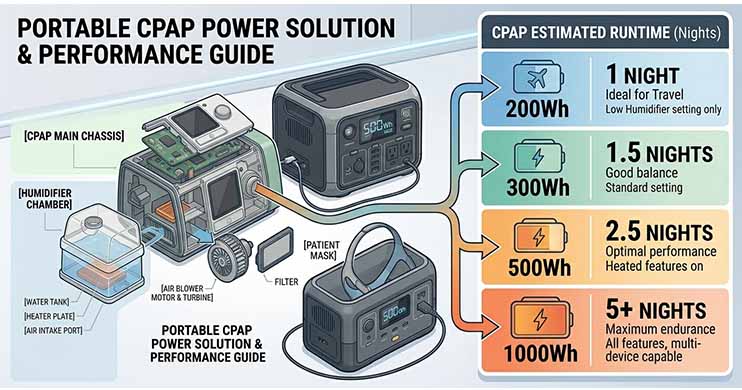
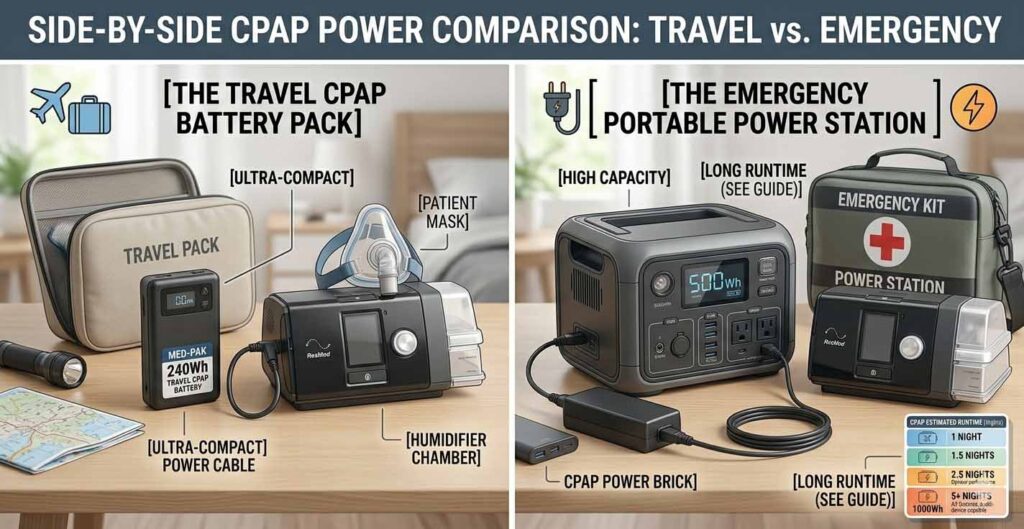
How Long Will a Portable Power Station Run a CPAP?

Portable power station runtime depends on battery capacity.

Examples:

Battery Size

Estimated CPAP Runtime

200Wh

1 night

300Wh

1–2 nights

500Wh

2–3 nights

1000Wh

Multiple nights

Actual results vary depending on efficiency and machine settings.

Users planning frequent travel often research the best portable power station for CPAP before selecting a backup system that matches their machine’s power demands.

Image Source: Poweraic

Ways to Reduce CPAP Power Consumption

If you want longer battery runtime:

  • Turn off heated humidifiers
  • Disable heated tubing
  • Use DC power when available
  • Lower brightness settings
  • Use travel-specific CPAP devices
  • Fully charge batteries before use

Even small changes can noticeably extend runtime.

Is a Portable Power Station Better Than a CPAP Battery?

Dedicated CPAP batteries are compact and designed specifically for sleep therapy.

Portable power stations provide:

  • More capacity
  • Multiple output ports
  • Emergency backup power
  • Ability to charge phones and devices
  • Solar charging support

For users who travel frequently or prepare for emergencies, portable power stations often provide greater flexibility.

Image Source: Poweraic

Frequently Asked Questions

Can a 300Wh battery run a CPAP all night?

Yes. Most CPAP machines running without heated humidifiers can operate for one full night on a 300Wh power station.

Does a humidifier use more electricity?

Yes. Heated humidifiers are one of the largest power consumers in a CPAP setup.

Is pure sine wave important?

Yes. Most CPAP manufacturers recommend pure sine wave output to protect sensitive electronics.

Can I use solar panels with my CPAP setup?

Yes. Many portable power stations support solar charging for extended off-grid use.

Final Thoughts

Most CPAP machines use somewhere between 30 and 100 watts, depending on settings and accessories.

Understanding your power requirements helps you select the correct backup system and avoid interruptions during sleep therapy.

Whether you travel frequently, camp outdoors, or simply want protection during outages, knowing your actual CPAP energy usage makes choosing the right battery much easier.

If you’re comparing backup solutions, reviewing the best portable power station for CPAP can help you find a system with enough runtime and capacity for uninterrupted sleep therapy.
Leave a Reply

Your email address will not be published. Required fields are marked *